
Quick answer: You need a cookie consent banner under GDPR and the ePrivacy Directive if your site sets non-essential cookies (analytics, advertising, or tracking cookies) before getting user consent. You generally don't need one if you use only strictly necessary cookies (like session/login cookies) or if your analytics tool doesn't use cookies or persistent identifiers at all. The banner requirement is triggered by how you track, not by the fact that you have a website.
Key Takeaways
- The trigger isn't "using analytics." It's setting cookies or similar identifiers for non-essential purposes without consent.
- Strictly necessary cookies (login sessions, shopping carts, security) never require consent.
- Cookie-free analytics tools that don't set identifiers or store IP addresses generally fall outside the consent requirement entirely.
- A consent banner that's poorly implemented (pre-checked boxes, no real "reject" option) can itself be a compliance risk, not just an inconvenience.
- Switching to cookie-free tracking is a legitimate way to remove the banner requirement: not a workaround, a different data practice.
What Actually Triggers the Cookie Banner Requirement?
GDPR itself doesn't mention cookies directly. The specific trigger comes from the EU's ePrivacy Directive (often called the "cookie law"), which requires consent before storing or accessing information on a user's device, with a narrow exception for cookies that are "strictly necessary" for a service the user explicitly requested.
In practice, that means:
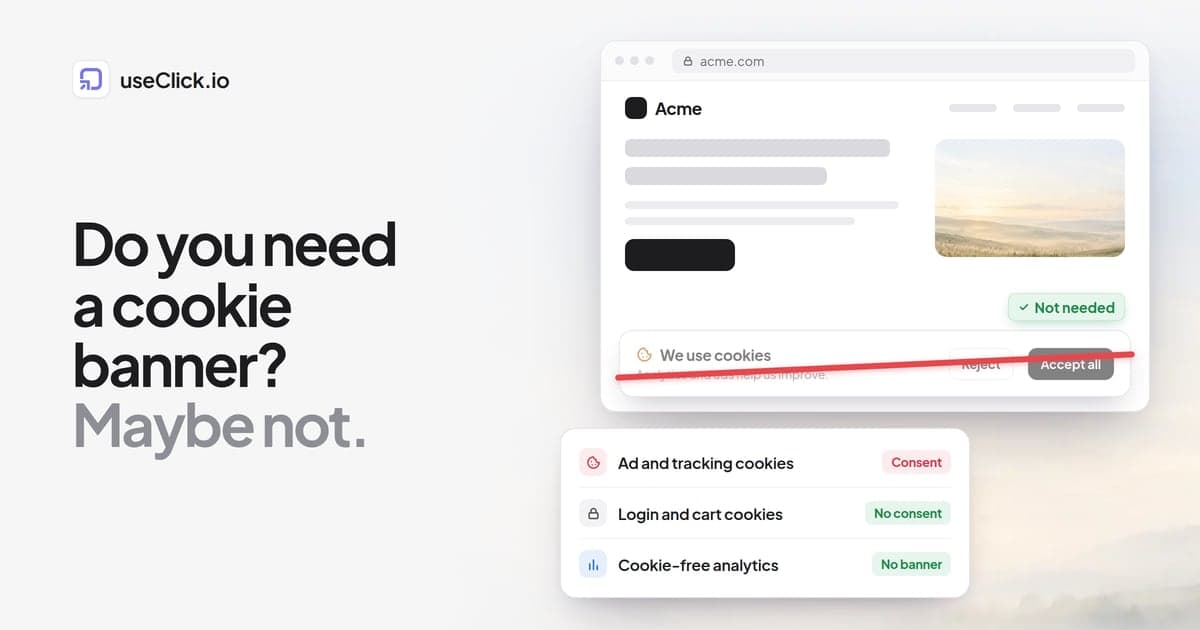
- Requires consent (and a banner): analytics cookies that build visitor profiles, advertising/retargeting cookies, third-party tracking pixels, cross-site identifiers.
- Does not require consent: session cookies that keep you logged in, shopping cart cookies, load-balancing cookies, security/fraud-prevention cookies. These are things the user would reasonably expect, and the service can't function without them.
- Generally falls outside the requirement: tracking that doesn't use cookies or persistent identifiers at all: aggregate, server-side event counting with no personal data stored.
That third category is the one most site owners don't realize exists. The assumption is often "I have analytics, therefore I need a banner." That's only true if the analytics tool in question uses cookies or stores personal data to do it.
Does Google Analytics Require a Cookie Banner?
Yes. Google Analytics sets cookies (_ga, _gid, and others) to track sessions and users, and depending on configuration, involves data processing that requires a documented legal basis under GDPR. That's the standard setup most sites run, and it's why a GA4 install is almost always paired with a consent management platform and a banner. If you want to drop the banner, UseClick vs Google Analytics shows what a cookie-free setup covers and what it doesn't.
What Counts as "Cookie-Free" Tracking, and Why Doesn't It Need a Banner?
Cookie-free analytics tools (Plausible, Fathom, Simple Analytics, and others in that category) typically avoid the consent trigger by not doing the thing that requires consent in the first place: they don't set cookies, don't store IP addresses, and don't build a persistent, cross-session visitor profile. Many use a daily-rotating hash (built from IP and user agent, then discarded) purely to deduplicate a "unique visitor" count for that day. Nothing persists, nothing is reversible, no individual is identifiable.
Because the ePrivacy trigger is about storing or accessing information on the user's device without consent, a tool that never does that in the first place isn't performing the regulated activity, so the consent requirement doesn't attach to it. That's a structural difference, not a legal loophole: the tool is architected to avoid collecting what would need protecting.
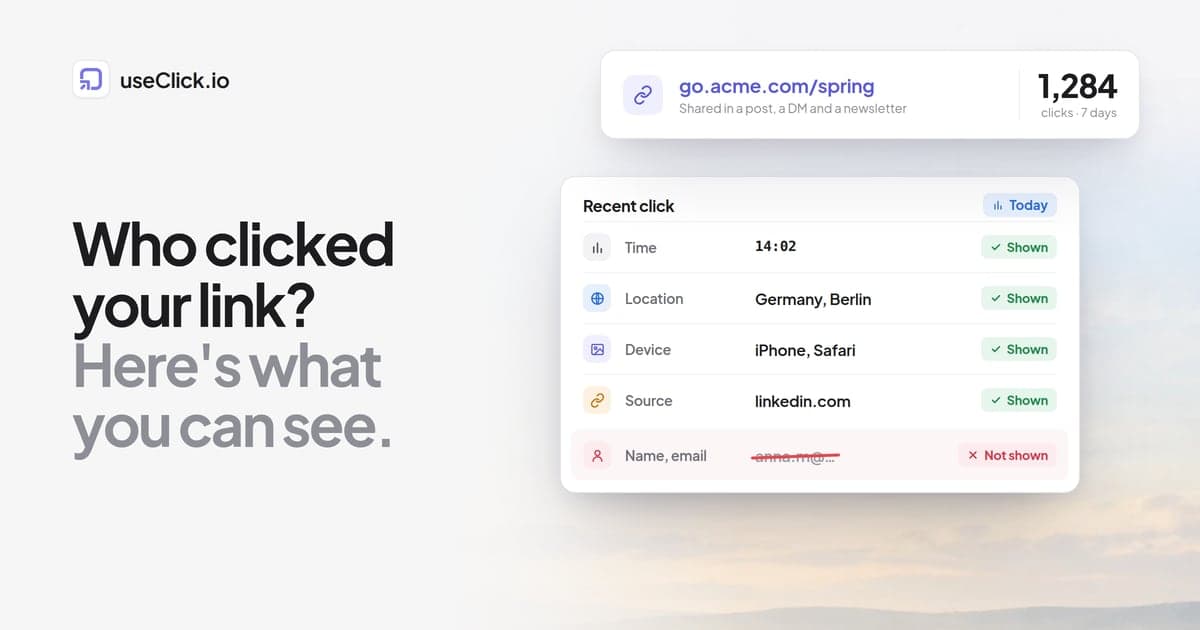
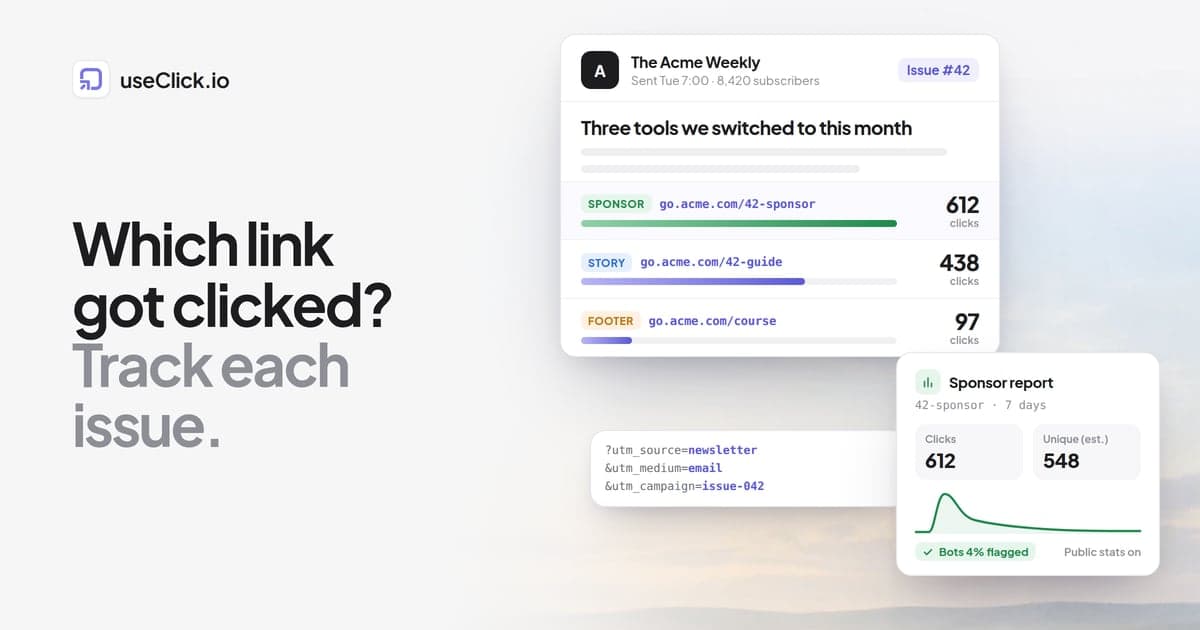
The same logic applies to link click tracking. See GDPR-compliant link tracking for how that plays out specifically for short links and campaign attribution rather than website analytics.
What Happens If You Get the Banner Wrong?
A cookie banner that technically exists but doesn't function as real consent is arguably worse than having no banner and no tracking that needs one. Common implementation mistakes: pre-ticked "accept" boxes (not valid consent under GDPR), no equally prominent "reject" option, or tracking scripts that fire before the user makes any choice at all. Regulators have fined companies specifically for these implementation failures, not for merely using cookies. If you're going to run cookie-based analytics, the banner needs to be a real choice, not a formality.
Curious how much traffic your current banner setup might be costing you in opt-outs? Run the numbers with the consent banner cost calculator.
Is Removing the Banner a Compliance Shortcut?
No, and it's worth being direct about this: removing the banner is only legitimate if you also remove the underlying data collection that required it. Switching to a cookie-free analytics tool changes what data is collected, not just how it's presented to users. If a site still runs cookie-based ad tracking or retargeting pixels alongside a "cookie-free" analytics tool, it still needs a banner for the parts that require one. The fix has to match the actual data practice, not just the visible UI.
Frequently Asked Questions
Do I need a cookie banner if I only use Google Analytics?
Yes. Google Analytics sets cookies to track sessions and visitors, which triggers the ePrivacy consent requirement in the EU and similar rules in other jurisdictions (UK GDPR, ePrivacy-equivalent laws).
What cookies don't require consent under GDPR?
Strictly necessary cookies (login sessions, shopping carts, load balancing, security and fraud prevention) are exempt because the service can't function without them and the user has effectively requested that functionality by using the site.
Can I avoid needing a cookie consent banner entirely?
Yes, if your tracking doesn't rely on cookies or persistent identifiers and doesn't store personal data like IP addresses. Cookie-free analytics tools are built specifically to operate outside the consent-triggering activity, not to bypass it.
Is a cookie banner required outside the EU?
Similar requirements exist under the UK's PECR (post-Brexit ePrivacy equivalent), Brazil's LGPD, and California's CCPA/CPRA for certain tracking and "sale of data" definitions, though the specifics differ. GDPR/ePrivacy is the strictest and most commonly cited standard.
Does a pre-checked "I agree" cookie banner comply with GDPR?
No. Valid consent under GDPR must be freely given, specific, and unambiguous. A pre-ticked box doesn't meet that bar, and several regulators have issued fines specifically over this implementation pattern.
What's the difference between a cookie banner and a privacy policy?
A privacy policy is a disclosure document describing what data you collect and why. A cookie banner is the mechanism for obtaining active consent before non-essential cookies are set. You can have a compliant privacy policy and still be non-compliant if your banner doesn't actually gate the cookies it claims to.