

Tracking user interactions online has gotten harder under privacy regulations like GDPR, and traditional methods that lean on cookies and personal identifiers are the reason why. This post looks at why you don't need cookies to track clicks, and why dropping them helps both privacy and the business doing the tracking.
The Problem With Cookies
Cookies have long been the standard way to track user behavior across the web, but they come with real drawbacks. They store personal or identifiable information, which raises data privacy and consent issues. Regulations like GDPR and CCPA mandate strict consent requirements for cookies, adding complexity for businesses. And because users increasingly block or delete cookies, the analytics data built on them gets less reliable every year.
How Cookie-Free Tracking Works
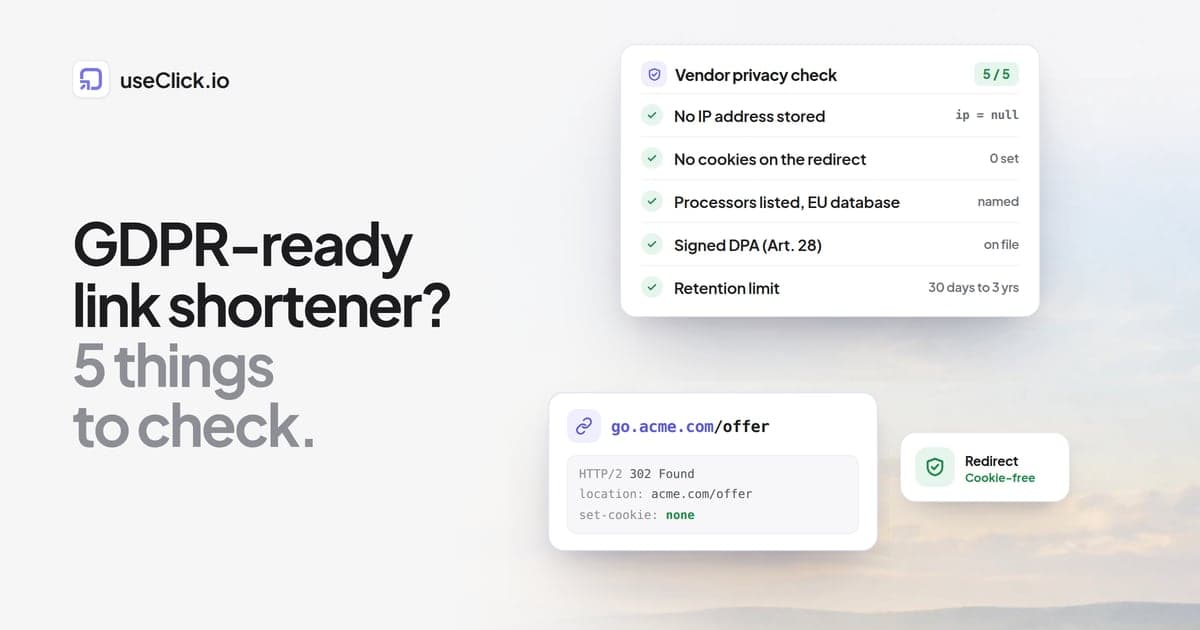
Cookie-free tracking skips storing personal data or tracking users across sites, and works with aggregated, anonymized analytics instead. Server-side tracking captures the essential metrics without setting cookies or storing personal identifiers. UTM parameters, plain URL tags, track campaign performance precisely without touching personal data. IP anonymization captures approximate geolocation without storing the full IP address.
What You Gain by Going Cookie-Free
Privacy-conscious users prefer businesses that respect their data, and cookie-free analytics is a visible way to show that, which builds trust over time.
It also simplifies compliance. If you don't store personal or identifiable data, you avoid complex consent management and cookie notices. Curious how many visitors your current banner is costing you? Try the consent banner cost calculator to see the number.
And the data itself holds up better. Cookie-free methods don't depend on user consent and aren't affected by ad blockers, so the analytics stay accurate instead of quietly degrading as more visitors opt out or block tracking.
Where This Shows Up in Practice
A few places cookie-free tracking makes a real difference: email campaigns, where privacy-friendly tracking links still show accurate clicks and conversions; social posts, where you get real engagement and referral data without compromising visitor privacy; and paid advertising, where you can tell which campaigns actually drive clicks without invasive tracking methods.
How UseClick.io Handles This
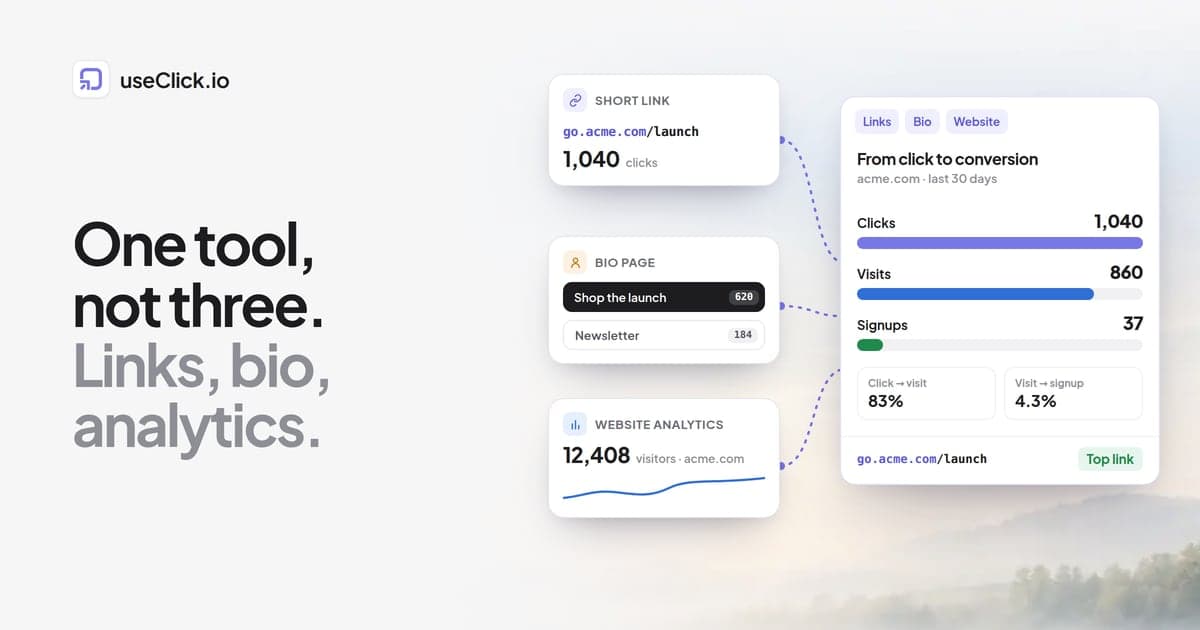
UseClick.io's tracking is cookie-free by default. No cookies and no IP tracking; insights come from anonymized, aggregated data instead. The result meets GDPR and CCPA requirements without a consent banner, and the dashboard shows clear metrics on clicks, referrers, and geographic locations.
Moving away from cookie-based tracking isn't just a regulatory box to check, it's a real opportunity to simplify compliance and get more reliable data. Tools like UseClick.io make that transition straightforward, so you can focus on understanding and improving performance without compromising user trust.
Ready to try privacy-first tracking? Get started with UseClick.io.