
What Is a Vanity URL?
A vanity URL is a short, custom, human-readable web address you create to point at a longer destination link: yourbrand.com/sale instead of yourbrand.com/products/category?id=9837&utm_source=.... It's "vanity" because you choose the wording to be memorable and on-brand. Vanity URLs are easy to say out loud (great for podcasts, radio, and video), easy to print, and they build trust because they carry your brand. Built on a link platform, they also let you track every click behind that clean address.
In short: a vanity URL makes a link memorable and measurable. Below is how to create one, then how to track it, with podcast attribution as the deepest use case.
How to Create a Vanity URL (Free)
- Pick a short domain. Use your own custom domain (e.g.
go.yourbrand.com) or a free branded short domain like UseClick'suclk.me. - Choose the keyword after the slash. Keep it short, spoken-friendly, and campaign-specific (
/podcast,/spring,/ep42). - Paste the destination (product page, signup, episode notes) and create the link.
- Share it everywhere. The same vanity URL works in show notes, on slides, in print, and in your bio.
- Watch the analytics. Clicks, location, device, and referrer flow into your dashboard, so you know which placement drove results. Create a free vanity URL with UseClick →
Why Vanity URLs Matter for Attribution
Podcast listenership hit 584 million people globally in 2025, up 6.8% year over year according to Fame.so. That reach comes with a paradox: 89% of podcast advertisers rely on coupon codes or vanity URLs for tracking, per the IAB US Podcast Advertising Revenue Study, yet most podcasters still fixate on download counts instead of conversion data. Audio doesn't allow for pixel-based tracking the way display ads do, and cookie deprecation under GDPR has closed off most of the legacy methods that used to fill that gap.
Vanity URLs are the privacy-compliant way to bridge it. Built with server-side analytics, these custom short links deliver precise sponsor reporting without a consent banner or lost data. This guide covers how to build a podcast attribution system that proves ROI and improves ad performance.
Why Podcast Attribution Remains Uniquely Difficult
Audio has a built-in measurement problem: listeners can't click a link mid-episode, and platforms like Apple Podcasts hand over limited referral data, days after publication at best. Podcasters end up relying on total downloads, a number that says nothing about which episodes actually drove a conversion.
The shift away from third-party cookies makes this worse. Web analytics depend on browser-stored identifiers to follow a user's journey, but cookie-free tracking approaches are now the only GDPR-compliant option. Pixel-based tools built for display ads don't work in audio, where a listener hears your call to action and doesn't act on it until minutes or hours later, through the show notes.
That gap is exactly why 90% of B2B podcasts still measure success by vanity metrics, even though podcast ads convert 1.5 times better than traditional media according to Command Your Brand research. The infrastructure to prove that conversion rate simply doesn't exist for most podcasters until they set up proper link attribution.
How Vanity URLs Solve Audio Attribution
A vanity URL is a branded short link that redirects to your sponsor's destination while capturing analytics server-side. Instead of asking listeners to remember "domain.com/landing-page-name-12345," you create "yourbrand.link/sponsor" and read it out loud during the ad. It's easier to recall, and the redirect captures every click without needing cookies or a consent banner.
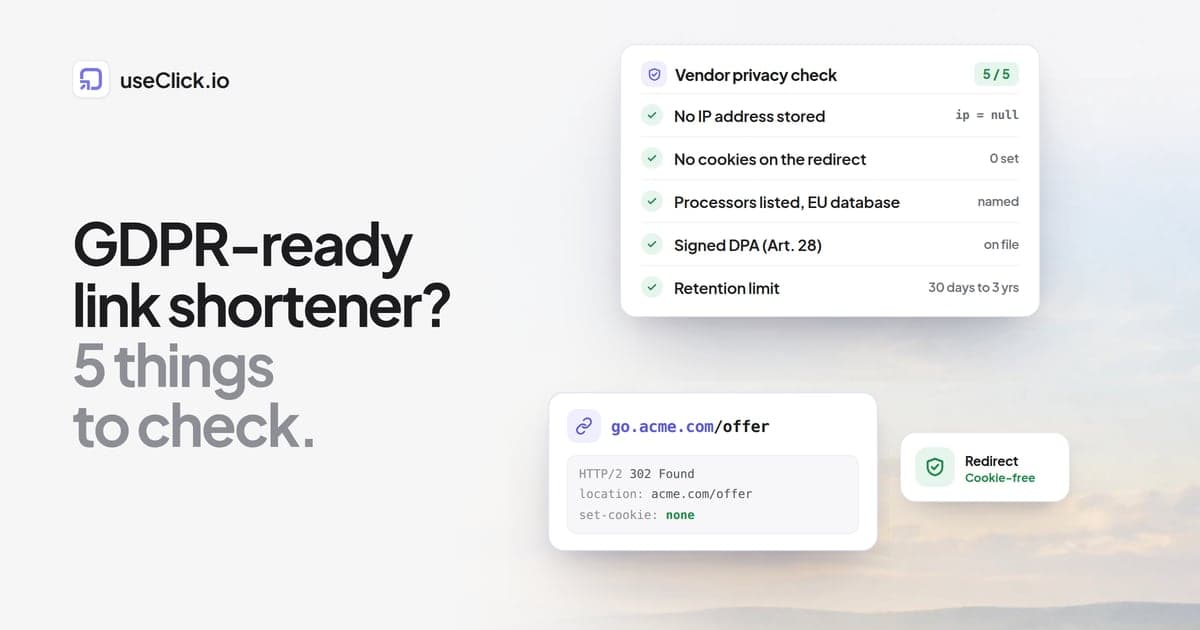
The server-side part is what makes this work. When a listener types your vanity URL, their browser requests that address from your link management server. Before redirecting them to the final destination, the server logs timestamp, geographic location, device type, and referrer, all without storing anything on the listener's device. That's what privacy-first attribution means in practice, and it's compliant with European data regulations by design.
Fame.so found that podcast-influenced deals close 23% faster and land 47% higher contract values when attribution is tracked properly. Vanity URLs make that measurement possible by giving you a direct-response mechanism connecting a specific episode to a specific revenue outcome.
Building Your Podcast Attribution System
Start by creating a unique vanity URL for each sponsor and episode combination. A naming structure like "yourbrand.link/sponsor-ep47" lets you identify traffic sources at a glance in your analytics dashboard, and shows you which episodes perform best for each sponsor, something aggregate download numbers can't tell you.
Layer UTM parameters on top to capture context beyond the vanity URL itself, like ad placement (pre-roll versus mid-roll) or promotional channel (organic show notes versus paid social). A UTM builder keeps that tagging consistent, which matters once more than one person on your team is creating links.
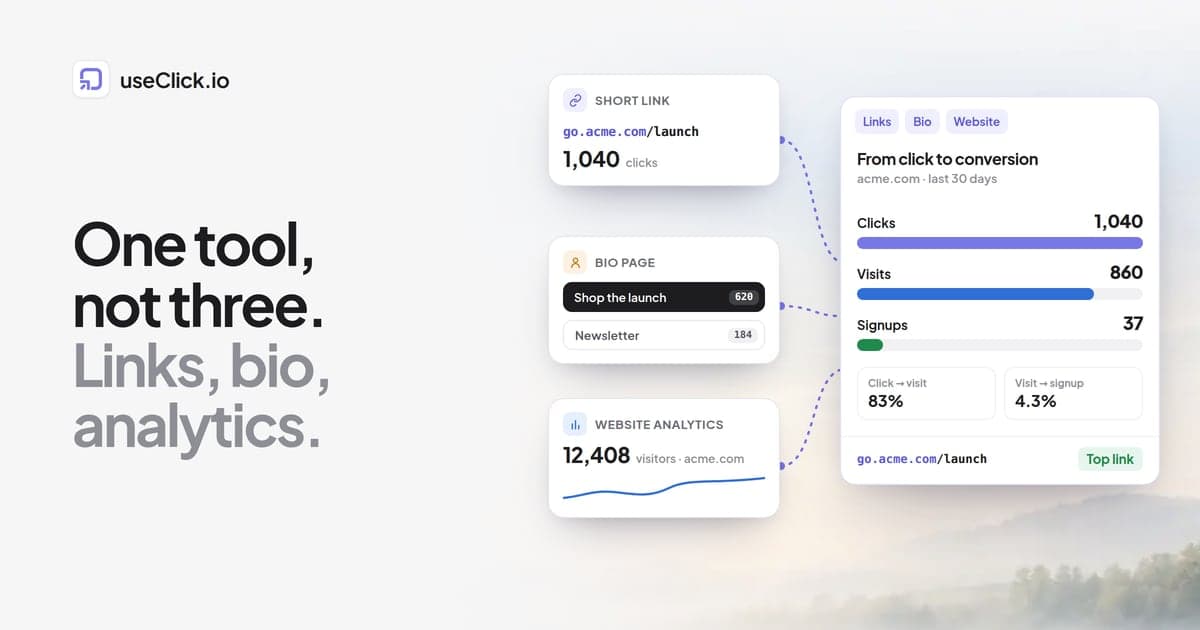
Configure server-side analytics to capture what sponsors actually care about. Click volume is a start, but geographic distribution shows market penetration, device data shows audience quality, and timestamp patterns show the best publishing windows. Privacy-first link management platforms log all of this during the redirect, without requiring listener consent, which gives you reporting depth that native podcast analytics simply don't have.
Consider geo-targeting for sponsors with regional pricing or inventory. An Amazon affiliate link needs a country-specific Amazon domain for the purchase to actually complete. Geo-targeting routes each click to the right regional destination automatically based on IP address, so one memorable vanity URL in your ad read still lands everyone in the right place.
Optimizing Sponsor Performance Through Link Testing
Once attribution infrastructure is in place, you can test ad creative with data instead of guessing. Create two vanity URLs for the same sponsor pointing at different destinations, say a product page versus a discount landing page. Mention one in episodes published Monday and the other on Wednesday, then compare conversion rates over four weeks.
That kind of testing changes the sponsor conversation. Instead of renewing a deal on vague "brand awareness" grounds, you can show which messaging and offer actually drove results. It's the same conversion-testing logic performance marketers use elsewhere, adapted to audio's constraints.
Track delayed conversions as well as immediate clicks. Podcast listeners often save an episode or jot down a URL to visit later, after a commute. Build attribution windows that capture clicks arriving 24 to 72 hours after publication, since that delay is normal for audio and invisible to any tool that only measures real-time engagement.
Sponsor Reporting That Proves ROI
Turn link analytics into reports that show business impact, not just downloads: click-through rates, geographic breakdowns, and conversion trends over the campaign period. If your link platform integrates with the sponsor's own analytics, you can go further and report on downstream actions like purchases or signups, the same revenue attribution Fame.so found speeds up deal closure by 23%.
Dashboards that update as new episodes publish beat sending sponsors a report weeks late. Platforms with data export let you pull that data into a custom report or share a live dashboard directly, which reads as a more serious media partner than a static download count.
Pairing vanity URL data with promo code usage gives you two independent signals: the URL shows awareness and interest, the code confirms a completed transaction. The same IAB study that found 89% of advertisers already use both methods points at why: together they're closer to proof than either one alone.
Common Implementation Mistakes to Avoid
Don't make vanity URLs too clever or hard to spell. "yourbrand.link/ep47-sponsor" beats "yourbrand.link/amazing-deal," because a listener typing from memory needs something simple, not something creative. Say each URL out loud during rehearsal; if you stumble or need to spell it letter by letter, simplify it.
Avoid changing vanity URLs mid-campaign. Some podcasters create a new link for every episode even when promoting the same sponsor across shows, which fragments the data and makes trend analysis impossible. Keep one consistent URL per ongoing sponsor and use UTM parameters to distinguish individual episodes instead.
Don't rely solely on platform-provided analytics. Apple Podcasts, Spotify, and other directories report downloads, not click-level attribution. That's content consumption, a fundamentally different metric from conversion activity, and conflating the two will misread sponsor performance.
Privacy Compliance and Data Ownership
Server-side link tracking supports privacy regulations by design, since it processes data outside the listener's browser. No cookies means no consent requirement under GDPR, which also means no banner fatigue on your side. That architectural difference is why vanity URLs hold up better than pixel-based attribution as privacy rules tighten worldwide.
Choose link management infrastructure hosted in your own jurisdiction to keep data sovereignty intact. European podcasters promoting to European audiences benefit from EU-hosted analytics that keep listener data inside GDPR-compliant infrastructure, a consideration that matters more here than for most other content formats, since audio audiences tend to be more privacy-conscious.
Keep ownership of your attribution data so you're not locked into one platform. If your link management tool shuts down or changes pricing, you need to be able to export historical analytics and move the data elsewhere. That protects the sponsor relationship intelligence you've built up over months or years of campaigns.
Frequently Asked Questions
What's the difference between vanity URLs and promo codes for podcast attribution?
Vanity URLs track awareness and interest by measuring clicks to a sponsor's destination, while promo codes confirm a completed transaction. URLs give you richer analytics, including geographic data, device types, and referral sources, than a redeemed code alone can capture. Most experienced podcasters use both together for attribution that spans the full listener journey from awareness to purchase.
How do I track podcast attribution without violating GDPR?
Server-side vanity URL tracking captures analytics during the redirect, without storing anything on the listener's device. Since no cookies or browser storage are involved, it doesn't require a consent banner under GDPR. Choose a link management platform that processes data within EU infrastructure and offers a clear data processing agreement to stay compliant while keeping detailed sponsor reporting.
Can I use vanity URLs to compare performance across different podcast platforms?
Yes. Create a distinct vanity URL for each distribution platform: "yourbrand.link/sponsor-apple" in Apple Podcasts descriptions, "yourbrand.link/sponsor-spotify" in Spotify show notes, and so on. Comparing click rates and conversion patterns across them shows which platforms deliver your most valuable listeners for each sponsor, which should inform where you invest promotional effort next.
How long should I keep tracking podcast vanity URLs active?
Keep them active indefinitely for evergreen content, since podcast episodes have long discovery tails as algorithms surface older shows and listeners work through back catalogs. Deactivating links once a campaign ends breaks the experience for anyone who finds the episode late, and loses attribution data from conversions that can happen weeks after someone first heard the episode.
Turn Attribution Into Your Competitive Advantage
The podcast market has 584 million listeners, and it rewards creators who can prove ROI rather than just promise reach. While competitors send sponsors a vague download report, you can hand over attribution connecting a specific episode to conversions, geographic reach, and audience quality. That's the difference between podcast advertising as an experimental budget line and podcast advertising as a channel sponsors can hold accountable.
Privacy-first vanity URLs get you there without technical complexity. Server-side tracking captures the analytics while staying GDPR-compliant, and branded links convert better than generic ones on their own. Start with a consistent naming convention, add UTM parameters for campaign context, and build sponsor dashboards that update as episodes go live.
UseClick provides cookie-free link tracking with EU-hosted analytics starting at €12/month, the sponsor reporting infrastructure that turns podcast advertising from a cost center into a revenue driver. Explore privacy-first analytics features built for marketers who need attribution without compromise.