
You've spent months perfecting your Shopify store. The product pages convert. The checkout flow is smooth. And then 77% of customers abandon their carts anyway.
That's not a typo. According to Mastercard's Dynamic Yield data from 2025, global cart abandonment sits at 76.8%. For every four customers who add something to their cart, three walk away. Your ad spend, your content marketing, your influencer partnerships: all of it funneling toward a checkout page that most visitors never complete.
But here's what separates the stores recovering 2% of abandoned carts from those recovering 14%: the link they send in their recovery SMS.
The $260 Billion Question Nobody's Asking
Baymard Institute estimates that $260 billion in abandoned cart revenue is recoverable annually. Not total abandoned revenue. Recoverable revenue. Money sitting on the table because most brands send generic "You left something behind!" emails with links that dump customers back at the homepage.
Think about the friction that creates.
A customer added three items to their cart at 2 PM. Got distracted. At 4 PM, they receive an SMS. They click through, land on your homepage, and now they need to remember what they wanted, find those products again, add them back to cart, and restart checkout. Most won't bother.
Personalized checkout links solve this by preserving the entire cart state. One tap, and the customer lands directly in checkout with their items already loaded. The difference in conversion is stark: the gap between 2.3% recovery and 16.4 recovered carts per 100 messages.
Why SMS Beats Email for Cart Recovery (And It's Not Just Open Rates)
Yes, SMS has 90%+ open rates compared to email's 39-45%. That stat gets repeated constantly. But open rates don't recover carts. Click-through on relevant links recovers carts.
The real advantage of SMS is context. When someone abandons on mobile (and 78% of abandoned carts happen on mobile devices), an SMS arrives in the same environment. No app switching. No hunting through a cluttered inbox. The recovery link opens in the same browser where they were just shopping.
Email recovery has its place. But for mobile-first abandonment, which represents the vast majority of lost revenue, SMS with a properly constructed checkout link outperforms every other channel.
The mistake most Shopify founders make? Treating SMS and email recovery identically. Same generic link. Same "complete your purchase" messaging. Same disappointing 2-5% recovery rate.
Anatomy of a High-Converting Abandoned Cart Link
Not all checkout links work the same way. A basic Shopify cart link might look something like yourstore.com/cart, but that doesn't preserve anything. The customer arrives at an empty cart.
A properly constructed personalized link includes cart token parameters that restore the exact items, quantities, and (where applicable) discount codes the customer had when they left. Some advanced implementations even preserve checkout progress: shipping info, selected payment method, everything except clicking "confirm."
Here's where most tracking breaks down, though.
Traditional link shorteners using cookie-based analytics can't reliably attribute SMS clicks. The customer might click on their phone, but if they complete purchase on desktop later (which happens more often than you'd think), that conversion disappears into a tracking black hole. You can't optimize what you can't measure.
Server-side tracking at the redirect level solves this. When the link itself logs the click, before any cookies or browser storage get involved, you capture attribution regardless of how the customer eventually converts. This matters enormously when you're trying to calculate actual ROI on your SMS recovery spend.
The GDPR Problem With Personalized URLs
Here's the uncomfortable truth most cart recovery guides skip: personalized checkout links can create compliance nightmares.
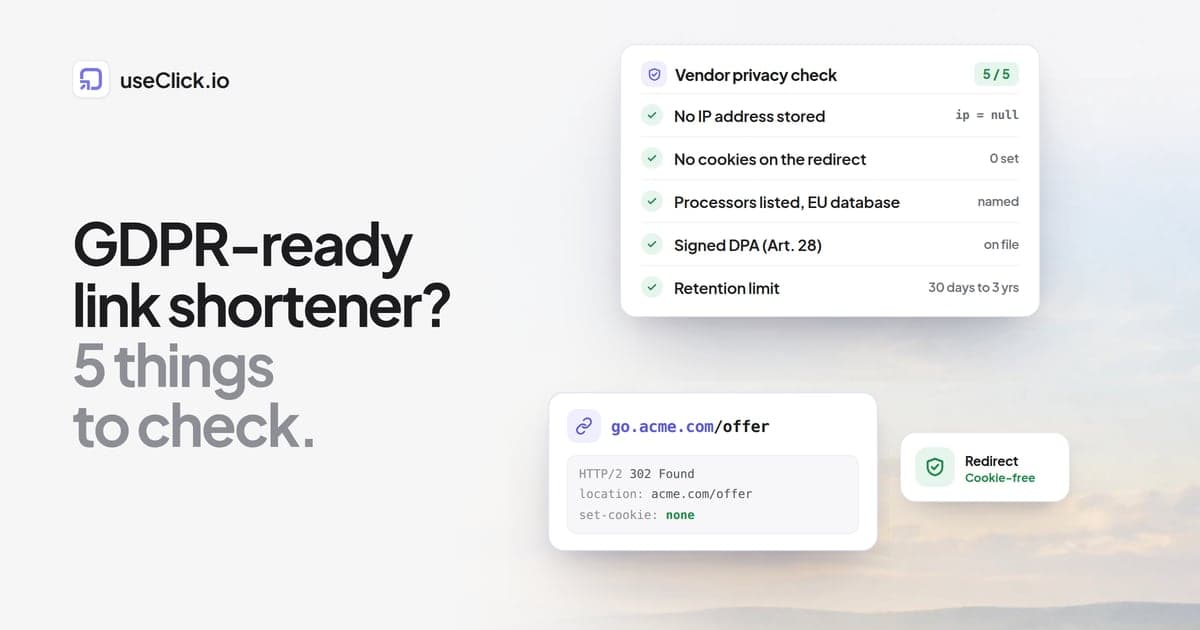
If your link shortener stores IP addresses, device fingerprints, or any other personally identifiable information, you've just created a data processing activity that requires explicit consent under GDPR. For EU customers (and increasingly, customers in GDPR-adjacent jurisdictions), that's a problem.
Cookie consent banners are one thing on a website. But you can't exactly pop a consent modal when someone clicks an SMS link. By the time they've landed on your checkout, any cookie-based tracking has already fired.
The cleanest solution is cookie-free click tracking that operates entirely server-side. No personal data stored. No consent required. Full visibility into click-through rates and conversion attribution without the legal exposure.
One Shopify Plus store I spoke with last year had been running SMS recovery for 18 months before realizing their link tracking setup was technically non-compliant for EU customers. They'd collected data they couldn't legally use and couldn't retroactively justify. That's an expensive lesson.
Timing and Frequency: What the Data Actually Shows
The conventional wisdom says send your first recovery SMS within an hour of abandonment. The data suggests that's often too aggressive.
For considered purchases (anything over $50, roughly), a 2-4 hour delay consistently outperforms immediate follow-up. Customers need time to realize they actually want the item, not just that they were browsing. Hitting them 15 minutes after abandonment feels intrusive and converts poorly.
For impulse-price items under $30, faster follow-up works better. The purchase decision is simpler, and the abandonment was likely just distraction rather than deliberation.
What about frequency? Two messages maximum per abandoned cart. The first with the recovery link. The second (24-48 hours later) with a small incentive if they haven't converted. Beyond that, you're burning SMS credits and annoying potential customers.
Track these windows carefully. If your UTM parameters aren't distinguishing between first-touch and second-touch recovery messages, you can't actually optimize timing. You're just guessing.
Building a Recovery Flow That Actually Scales
Manual cart recovery doesn't scale past a few dozen abandonments per day. At any reasonable volume, you need automation, but automation that's smarter than "send link at X hours."
Start by segmenting cart value. A customer abandoning a $400 cart deserves different treatment than someone who left a $12 item behind. The high-value cart might warrant a personal follow-up. The low-value one gets automated recovery only.
Next, consider geographic targeting. An EU customer clicking your recovery link should land on a checkout showing prices in euros with VAT included. A US customer should see USD with tax calculated at checkout. Sending everyone to the same generic checkout page leaves money on the table.
Then there's the link itself. Branded short links consistently outperform generic shortened URLs in SMS. When customers see yourbrand.co/cart instead of some random string of characters, click-through rates jump 20-30%. It looks legitimate. It reinforces your brand. And it doesn't trigger spam filters the way suspicious-looking shortened links often do.
Measuring What Matters (And Ignoring What Doesn't)
Most cart recovery dashboards show you clicks and recovered revenue. That's useful but incomplete.
The metrics that actually drive optimization:
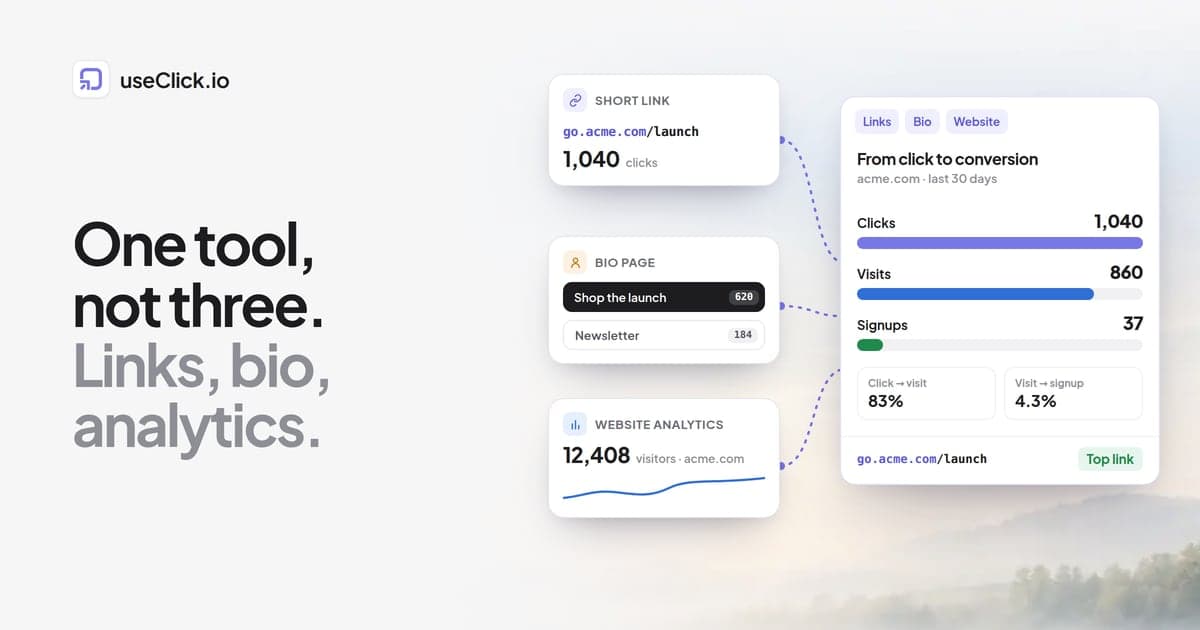
- Click-to-recovery rate: What percentage of people who click actually complete purchase? If clicks are high but conversions are low, your checkout page is the problem, not your SMS.
- Time-to-conversion: How long between click and purchase? If it's consistently over 24 hours, your links aren't preserving cart state properly. Customers are clicking, leaving, and coming back manually.
- Recovery by cart value tier: Are you recovering $50 carts at the same rate as $200 carts? Usually not. Segment your data accordingly.
- Channel attribution: Did they click SMS, convert via email, or come back direct? Without proper cross-channel tracking, you're probably over-crediting one channel.
Vanity metrics like open rates and total messages sent tell you almost nothing about actual revenue impact.
The Privacy-First Advantage
Cookie deprecation isn't coming. It's here. Google's timeline has shifted repeatedly, but the direction is clear. Third-party cookies are dying, and the tracking infrastructure most cart recovery tools depend on is dying with them.
Stores that shift to server-side, cookie-free attribution now will have clean historical data when competitors are scrambling to rebuild their analytics from scratch. That's a compliance advantage and a competitive one.
The brands recovering 10-14% of abandoned carts aren't using fundamentally different messaging than everyone else. They're using better links: links that preserve cart state, track clicks without cookies, respect privacy by default, and attribute conversions accurately across devices and sessions.
That's less a technology problem than a choice about what infrastructure you build on.
Frequently Asked Questions
How quickly should I send an abandoned cart SMS?
For carts over $50, wait 2-4 hours. For lower-value impulse items, 30-60 minutes works better. Test both windows with proper attribution tracking to find your optimal timing.
Do personalized checkout links work with Shopify's native cart recovery?
Shopify's built-in recovery sends basic emails, but the links don't include full cart state for all scenarios. For SMS recovery with preserved cart tokens, you'll need a dedicated solution or custom implementation.
Won't customers find personalized URLs creepy?
Only if you make them creepy. A link that says "complete your purchase" and loads their cart is convenient, not invasive. A link that references specific items by name in the SMS body can feel surveillance-y. Keep the personalization in the link functionality, not the message copy.
What recovery rate should I realistically expect?
Industry average is 2.3-5.4%. Well-optimized SMS flows with proper personalized links hit 10-14%. If you're below 5%, your links or timing need work.
Recovering abandoned carts isn't about sending more messages or offering bigger discounts. It's about removing friction at the exact moment a customer is willing to reconsider. The link you send, and how it's tracked, determines whether you're part of the $260 billion being recovered or the much larger pile being left behind.