Link A/B Testing: The Underrated Conversion Optimization Tactic
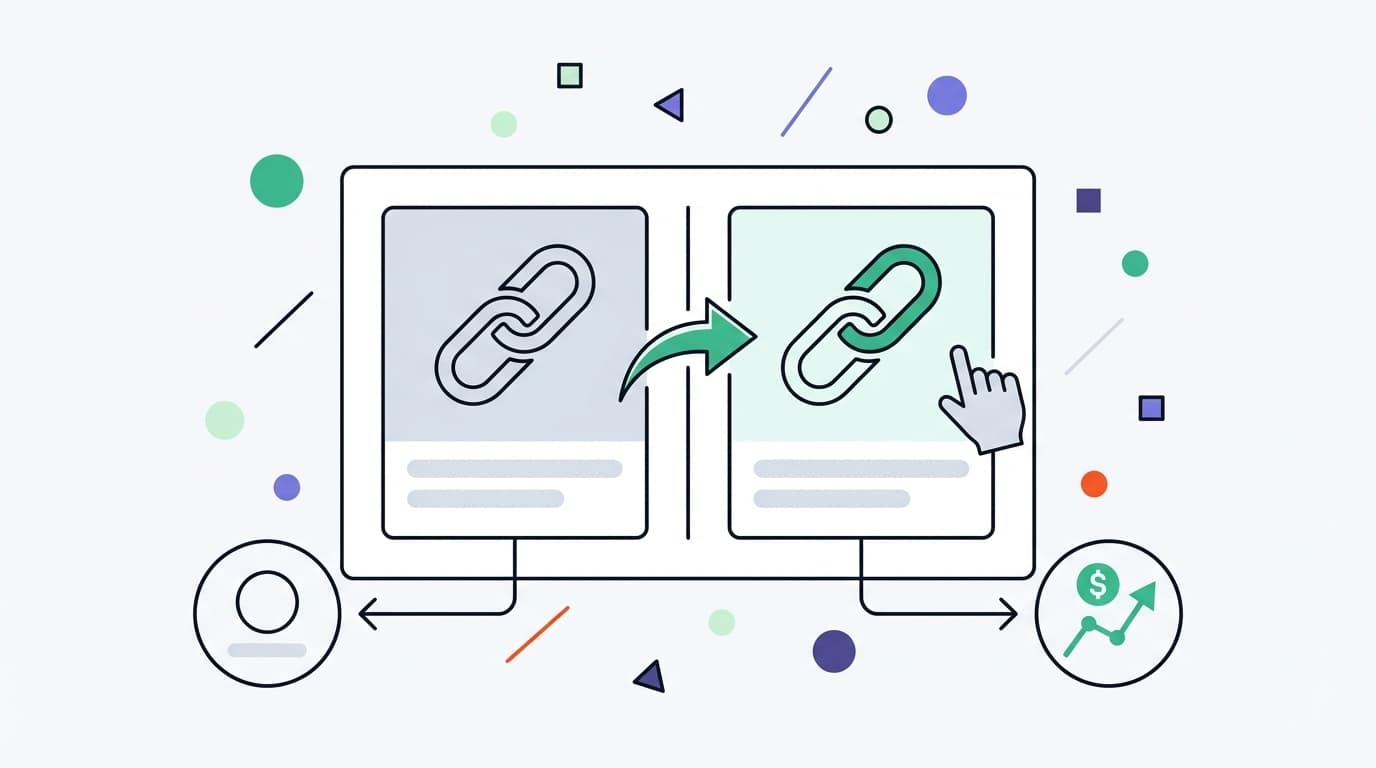
Most e-commerce teams spend months perfecting landing page designs, testing button colors and headline variations. Yet they overlook a simpler lever that sits one step earlier in the journey: the link itself. Link A/B testing, splitting traffic at the URL level to test different destinations, is delivering 18-40% conversion improvements for brands that implement it properly, according to ConversionXL Industry Benchmarks. And unlike traditional page testing, it works without cookies or complex code changes.
The A/B testing tools market is projected to reach $1.08 billion by 2025, driven largely by AI adoption and privacy regulation pressures. While most of that growth focuses on page-level experimentation, the real opportunity lies in testing decisions before users even land on your site. Should mobile traffic go to your app or mobile web? Do European customers convert better on localized landing pages? Does your affiliate link perform better pointing to a product page or a collection?
Traditional approaches can't answer these questions efficiently. Link-level testing connects directly to modern link management systems that track the complete journey from click to conversion, all while maintaining GDPR compliance through server-side analytics.
Why Link-Level Testing Outperforms Page Testing for Key Scenarios
Page-level A/B testing has dominated conversion optimization for years, but it carries inherent limitations. You need developer resources to implement tracking scripts. You're constrained to testing variations of a single page. And with cookie deprecation accelerating, your client-side tracking becomes increasingly unreliable.
Link A/B testing operates at a different layer entirely. When someone clicks your shortened URL, the server decides in real-time which destination to serve. This happens before any page loads, before any cookies are set, and without any JavaScript execution. The analytics capture everything server-side: which variant each user saw, their geographic location, device type, and ultimately whether they converted.
This approach excels in scenarios page testing simply can't handle. Testing whether iOS users convert better through your app deep link versus mobile web requires routing decisions at the link level. Comparing conversion rates across different regional Amazon storefronts for affiliate links demands geo-targeted link routing. Even testing completely different landing page concepts, not just variations of the same page, becomes trivial when you split at the URL.
The privacy advantage matters more each quarter. Server-side link splitting doesn't rely on third-party cookies or browser-based tracking that ad blockers strip away. You maintain accurate attribution across the full customer journey, even as Safari, Firefox, and eventually Chrome tighten tracking restrictions. For European e-commerce operations, this means GDPR compliance by design rather than retrofit.
The Conversion Lifts Link Testing Unlocks
The numbers validate link-level testing as more than theoretical. PowerReviews data shows that adding reviews to product pages increases conversions by 18% on average. The practical value: you can test whether your affiliate links should point directly to product pages with reviews versus collection pages through simple link splits, without touching any website code.
ConversionXL's CTA research found that sticky add-to-cart buttons deliver 18-32% conversion lifts. E-commerce brands testing mobile app deep links versus mobile web through link splits often see similar magnitude improvements, simply by routing users to the experience that converts best for their device.
The cumulative effect compounds significantly. Brands running systematic A/B testing programs, including both page and link-level experiments, achieve 25-40% cumulative annual improvements according to ConversionXL Industry Benchmarks. Link testing contributes disproportionately because tests run faster (no development cycles), reach earlier decision points (pre-landing), and maintain accuracy despite privacy restrictions.
Consider a practical scenario: You're running Instagram ads for a product launch, splitting budget between Story placements and Feed placements. Traditional analytics shows Feed generates more clicks, but link-level testing reveals Story traffic converts 23% better because those users arrive with higher intent. You can't discover this through page testing, since the landing page is identical. The insight only shows up at the link routing level, and it can reshape your media buying strategy.
Setting Up Privacy-Compliant Link Split Tests
Implementing link A/B testing requires infrastructure that most legacy platforms weren't designed to provide. You need server-side logic that can split traffic according to your rules, track each variant accurately without cookies, and attribute downstream conversions back to the original click.
Modern link management platforms handle this through several key components. First, they generate unique short URLs that mask the underlying split test. Your audience sees a clean branded link, while the server maintains the testing logic. When someone clicks, the platform evaluates your split rules (50/50 traffic allocation, geo-targeting conditions, device-based routing) and redirects to the appropriate destination.
The analytics capture happens entirely server-side during that redirect. No pixels fire in the user's browser. No cookies get set. No consent banner appears. The platform logs the click, the variant served, device data from the user agent string, and geographic data from the IP address. This creates a privacy-first tracking approach that works regardless of browser restrictions.
For conversion attribution, you have two paths. Simple tests track click-through rates and engagement metrics available server-side: which destination generates more clicks to subsequent pages, lower bounce rates, or higher time on site inferred from multi-click patterns. More sophisticated setups integrate with your analytics platform or CRM, passing variant IDs through UTM parameters that connect clicks to revenue events in your existing attribution system.
The statistical rigor remains identical to page testing. You still need sufficient traffic volume, appropriate test duration, and proper significance thresholds. The difference is implementation complexity: launching a link split test takes minutes rather than sprint cycles, and the results aren't contaminated by cookie loss or ad blocker interference.
Practical Link Testing Strategies for E-commerce
The most impactful link tests address strategic routing decisions rather than minor variations. Start with mobile app versus mobile web splits. If you have an e-commerce app, test whether mobile traffic converts better through app deep links or your mobile website. Track not just immediate conversions but lifetime value: app users often show higher retention even if initial conversion rates are comparable.
Geographic routing tests deliver substantial lifts for international operations and affiliate marketers. Amazon affiliates running geo-targeted splits consistently report 15-25% commission increases simply by routing UK traffic to Amazon.co.uk, German traffic to Amazon.de, rather than defaulting everyone to Amazon.com. The products arrive faster, pricing displays in local currency, and conversion rates improve accordingly.
Landing page concept tests work exceptionally well at the link level. Rather than A/B testing headline variations on a single page template, test fundamentally different approaches: product page versus category page, long-form sales page versus minimalist product showcase, video-first landing versus image gallery. These strategic choices matter more than tactical optimization, and link testing lets you validate them quickly.
For email and social campaigns, test destination diversity. Does your newsletter link perform better pointing to blog content, product pages, or collection landing pages? Do Instagram bio links convert better to a link-in-bio page or directly to your best-selling product? These insights reshape content strategy, not just individual campaigns.
Platform-specific optimization also benefits from link testing. Test whether LinkedIn traffic converts better on B2B-focused landing pages versus consumer-oriented ones. Compare TikTok traffic performance on fast-loading product pages versus rich media experiences. Different traffic sources carry different intent and expectations; link testing helps you match destinations to audience mindset efficiently.
Avoiding Common Link Testing Mistakes
The simplicity of link testing creates its own pitfalls. The most common mistake is insufficient traffic volume. While link tests don't require developer resources, they still need statistical power. Testing a 10% conversion lift to 95% confidence requires roughly 3,800 visitors per variant. Run the numbers before launching tests on low-traffic links, or extend duration appropriately.
Another frequent error is testing too many variants simultaneously. Unlike page testing where you control the experience, link testing splits traffic before users land. Split traffic four ways and your test duration quadruples. Start with simple A/B splits, validate winners, then iterate. Sequential testing often reaches insights faster than complex multivariate approaches with limited traffic.
Ignoring external validity undermines many tests. If you run a link test during a promotional period, the winning destination might differ from evergreen performance. Black Friday traffic behaves differently than February traffic. Test during representative periods, and revalidate winning variants periodically rather than assuming permanent superiority.
The attribution gap catches many teams off guard. Link-level analytics excel at tracking immediate post-click behavior, but connecting to revenue requires integration planning. Set up UTM parameters or variant tracking before launching tests, or you'll have traffic data without conversion clarity. This integration between link analytics and your revenue tracking is what transforms click data into business intelligence.
Finally, teams often neglect mobile-specific considerations. Mobile users behave differently than desktop users: they're more impatient, more sensitive to page load times, and more likely to abandon complex forms. A destination that wins for desktop traffic may fail for mobile. Segment your link tests by device type, or at minimum validate that winning variants perform across both segments before full rollout.
Building a Systematic Link Testing Program
One-off link tests deliver isolated insights. Systematic programs compound improvements quarter over quarter. Start by mapping your highest-traffic links: top email CTAs, primary social bio links, main affiliate URLs, most-shared content links. These represent the highest-leverage testing opportunities because improvements scale across significant volume.
Prioritize tests by expected impact multiplied by implementation ease. Link testing's advantage is speed, so exploit it. Run quick two-week tests on medium-confidence hypotheses rather than only testing high-confidence ideas. The learning velocity often matters more than individual test magnitude when you're building a knowledge base about what resonates with your audience.
Document everything in a testing repository. Record hypotheses, configurations, results, and importantly, the context. Which promotional period was running? What traffic sources were active? What were competitors doing at the time? Future tests benefit enormously from historical context that explains why certain approaches worked or failed.
Integrate link testing insights into your broader optimization program. A link test revealing that mobile traffic converts better through your app should trigger deeper questions: Why? What friction exists in mobile web? Can you bring app advantages to mobile web, or should you invest more in app acquisition? Link tests often identify symptoms; follow-up investigation reveals root causes worth addressing systematically.
As your program matures, expand beyond conversion optimization into audience research. Link tests reveal preference signals: which content formats different segments prefer, which value propositions resonate, which user experiences drive engagement. This intelligence informs product development, content strategy, and marketing positioning far beyond individual campaign optimization.
The Privacy-First Future of Conversion Testing
Industry projections show 30% of companies will use AI for testing processes by 2025, up from just 5% in 2021 according to Gartner research. But AI-powered optimization means nothing if your tracking infrastructure crumbles under privacy restrictions. Link-level testing with server-side analytics provides the foundation for reliable attribution in a post-cookie environment.
European e-commerce operations face the strictest requirements, but global convergence toward privacy regulation is accelerating. California's CCPA, Canada's PIPEDA, Brazil's LGPD: regulation everywhere is moving toward user consent and data minimization. Testing approaches that require extensive tracking consent become progressively harder to implement at scale.
Server-side link testing sidesteps these complications by never collecting personal data in the first place. The analytics track aggregate patterns, such as which destinations convert better and which geolocations show different preferences, without identifying individuals or tracking them across sites. This architectural approach to privacy compliance proves more durable than consent-based workarounds that depend on user acceptance rates.
The market opportunity reflects this shift. The A/B testing tools market reaching $1.08 billion by 2025 represents massive investment in optimization infrastructure. Tools that deliver reliable insights despite privacy constraints capture disproportionate value. For e-commerce brands, this means choosing link tracking platforms that prioritize server-side analytics and privacy-compliant architecture from the ground up.
Frequently Asked Questions
What is link A/B testing and how does it differ from regular A/B testing?
Link A/B testing splits traffic at the URL level, routing different visitors to different destinations before they land on any page. Regular A/B testing shows different versions of the same page after visitors arrive. Link testing excels at testing fundamentally different destinations (app versus web, different product pages, regional variations) while traditional testing optimizes elements within a single page experience.
How much traffic do I need to run link split tests effectively?
A meaningful test detecting a 10% conversion improvement requires roughly 3,800 visitors per variant at 95% confidence. Smaller improvements demand more traffic: a 5% lift needs around 15,700 per variant. High-traffic links can run tests in 1-2 weeks, while lower-volume links may need 4-6 weeks. The key is reaching statistical significance rather than rushing to conclusions on insufficient data.
Can link testing work without cookies while staying GDPR compliant?
Yes, and this is actually link testing's primary advantage. Server-side analytics capture click data, device information, and geographic location during the redirect without setting any cookies in the user's browser. This approach doesn't track individuals across sites or collect personal data, making it inherently GDPR compliant without requiring consent banners. You maintain accurate attribution while respecting privacy regulations.
What types of destinations should I test for e-commerce links?
High-impact tests include mobile app versus mobile web routing, regional storefronts for international audiences, product pages versus collection pages, video landing pages versus image galleries, and promotional landing pages versus evergreen content. Focus on strategic routing decisions rather than minor variations, testing fundamentally different user experiences that align with different audience segments or traffic sources for maximum lift potential.
Start Testing Where Traditional Tools Can't Reach
Link A/B testing fills a critical gap in most conversion optimization programs. While teams obsess over button colors and headline variations, the strategic routing decisions that happen one step earlier often deliver larger impacts with less effort. Testing whether your audience converts better through apps or web, localized destinations or global defaults, content or commerce: these questions shape revenue trajectories more than incremental page tweaks.
The combination of server-side analytics, privacy compliance, and rapid implementation makes link testing particularly valuable as traditional tracking methods deteriorate. You don't need consent banners, developer resources, or complex attribution workarounds. You need infrastructure that splits traffic intelligently and tracks results accurately.
For e-commerce operations serious about conversion optimization in a privacy-first era, link-level testing delivers the combination of speed, accuracy, and compliance that page testing alone cannot match. The brands achieving 25-40% cumulative annual improvements aren't testing more. They're testing smarter, at every stage of the customer journey. Explore how modern link management platforms enable split testing without cookies or code changes, and start capturing the conversion lifts traditional approaches miss.