

Link rot isn't a future problem. It's happening right now, and it's accelerating. According to Pew Research Center's 2023 study, 38% of webpages that existed in 2013 were completely inaccessible by 2023. Even more alarming: 8% of pages from just two years prior vanished by 2023. Every broken link on your site signals neglect to search engines, erodes domain authority, and creates a poor user experience that tanks conversion rates.
The traditional approach, manual quarterly audits with spreadsheets, can't keep pace with modern link decay. Between site migrations, expired domains, content drift, and the flood of AI-generated content cluttering the web, broken links multiply faster than teams can track them. You need automated, privacy-compliant systems that detect and fix 404s before they damage your rankings.
Why Link Rot Accelerated in 2023-2025
Link rot has gotten worse due to several converging factors. The Pew Research study found that 23% of news webpages and 21% of government websites contain at least one broken link, and these are relatively well-maintained sites with dedicated teams. Smaller businesses and content publishers face even worse odds.
Traffic to established websites (excluding newer entrants) has declined over 11% in the past five years according to Similarweb data analyzed by Axios in 2025. This decline isn't just about competition. It reflects degraded user experience from broken internal structures, outdated backlinks, and content that no longer serves search intent. When users encounter 404 pages, they bounce. When search engines crawl dead ends, they devalue your domain.
The explosion of AI-generated content has compounded the problem. Automated content farms create thousands of pages that link to each other, then disappear overnight when domains expire or platforms shut down. If your site links to these sources, or if they linked to you, you're left with broken connections that hurt both directions of your link graph.
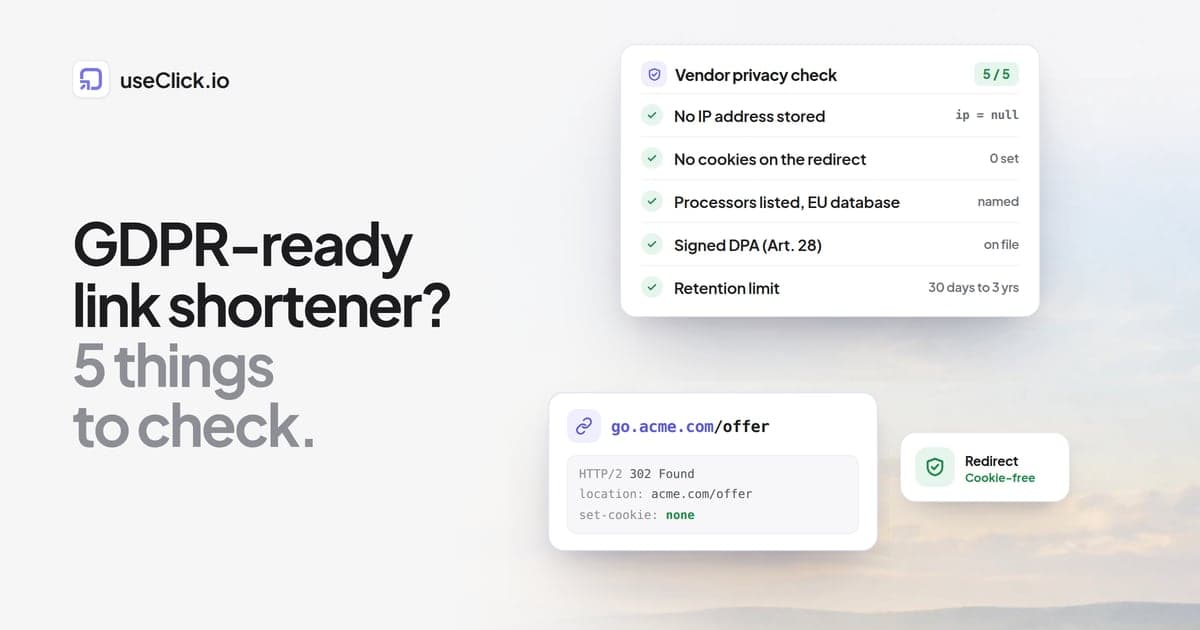
Traditional cookie-based monitoring tools add another layer of complexity. Under GDPR and emerging privacy regulations, tracking user behavior through cookies requires consent banners and extensive data protection measures. For EU-based businesses or those serving European audiences, this means choosing between compliance and comprehensive link monitoring, unless you adopt cookie-free tracking methods that monitor at the server level.
The Real SEO Cost of Broken Links
Search engines interpret broken links as signals of site quality. A page littered with 404s tells Google's crawlers that your content is outdated, poorly maintained, or potentially abandoned. This directly impacts your ability to rank for competitive keywords.
Domain authority, the cumulative trust search engines assign to your entire site, degrades progressively as broken backlinks accumulate. When authoritative sites once linked to your content but those pages now return errors, you lose that SEO equity entirely. The link still appears in some indexes, but it carries no value. Worse, if those external sites detect the broken link and remove it entirely, you lose even the potential to reclaim that authority through redirects.
Internal link rot creates isolated content islands. Pages that once distributed PageRank throughout your site become disconnected, unable to pass authority to newer content. Your best-performing pages might be unknowingly linking to 404s, fragmenting the user journey and preventing search engines from understanding your site's topical relationships.
For sites with high link volume, news sites, resource hubs, government portals averaging 20+ external links per page, the exposure multiplies fast. Each additional link introduces another potential failure point. Without scalable, automated monitoring, even diligent teams fall behind.
How to Fix Broken Links Automatically Without Privacy Violations
Manual link audits might catch obvious 404s, but they miss the dynamic nature of modern link decay. A backlink that worked yesterday might break today. An internal link might redirect to a competitor's domain after acquisition. You need real-time detection, not quarterly snapshots.
Server-side link monitoring solves both the scale and privacy challenges. By tracking link health at the redirect level, before any user data touches a browser, you can detect 404s instantly without triggering GDPR requirements for consent banners. This approach captures the full picture: which links broke, when they broke, and how much traffic they were receiving before failure.
Implement geo-targeted monitoring for international sites. A link might work perfectly for US visitors but return 404s for EU users due to regional content restrictions or CDN misconfigurations. EU-hosted analytics platforms ensure you're monitoring from the same jurisdictional perspective as your compliance obligations, catching issues that US-based tools miss.
Automated redirect rules preserve SEO equity when you detect broken internal links. Rather than letting users hit 404 pages while you manually create redirects, configure your link management system to automatically route traffic to the most relevant alternative page based on URL structure, content similarity, or historical traffic patterns.
For broken backlinks, links from external sites pointing to your 404s, automated monitoring alerts you immediately. You can then contact the linking site to update the URL or implement strategic redirects that capture that inbound authority. The faster you act, the less SEO value you lose.
Prioritizing Link Fixes for Maximum SEO Impact
Not all broken links carry equal weight. A 404 linked from your homepage matters infinitely more than a broken reference buried in a three-year-old blog post with zero traffic. Prioritization determines whether your link maintenance actually moves the SEO needle.
Start with high-traffic pages. Use your analytics to identify which pages drive the most organic search traffic, then audit every link on those pages first. A single broken link on a page ranking in position 3 for a high-value keyword could be costing you significant conversions while signaling quality issues to search engines.
Focus on pages with strong backlink profiles next. If an article has earned 50 quality backlinks, every internal link from that page carries amplified weight. Ensure those outbound connections work flawlessly, and verify that the page itself isn't generating 404s when accessed from different backlink sources.
Monitor pages with external links that have a half-life under four years: essentially any reference to news sites, startups, or content platforms with high churn. The Pew Research data shows that content from 2019-2021 is already experiencing 8% decay rates. Links to sources from that era require more frequent validation than references to established institutional sites.
Don't ignore redirected links that still technically work. A link that redirects once is fine. A redirect chain of three or more hops slows page load times and dilutes SEO value with each additional jump. Audit your redirect chains quarterly and flatten them by updating the original link to point directly to the final destination.
Building a Privacy-First Link Maintenance System
The intersection of link tracking and data privacy creates a compliance minefield for EU-based businesses. Traditional link checkers often rely on client-side JavaScript that tracks user behavior, technically classifying them as cookies under GDPR's broad definition of tracking technologies.
Server-side tracking eliminates this risk entirely. When link validation happens at the server level during redirects, no user data ever touches a browser. You're monitoring infrastructure health, not user behavior. This distinction keeps you compliant while providing more reliable data: no ad blockers, no cookie consent opt-outs skewing your metrics.
Choosing EU-hosted infrastructure adds another compliance layer. Data sovereignty regulations increasingly require that EU citizen data stays within EU borders. A link management platform hosted in Frankfurt or Amsterdam ensures that even temporary redirect logs comply with data localization requirements.
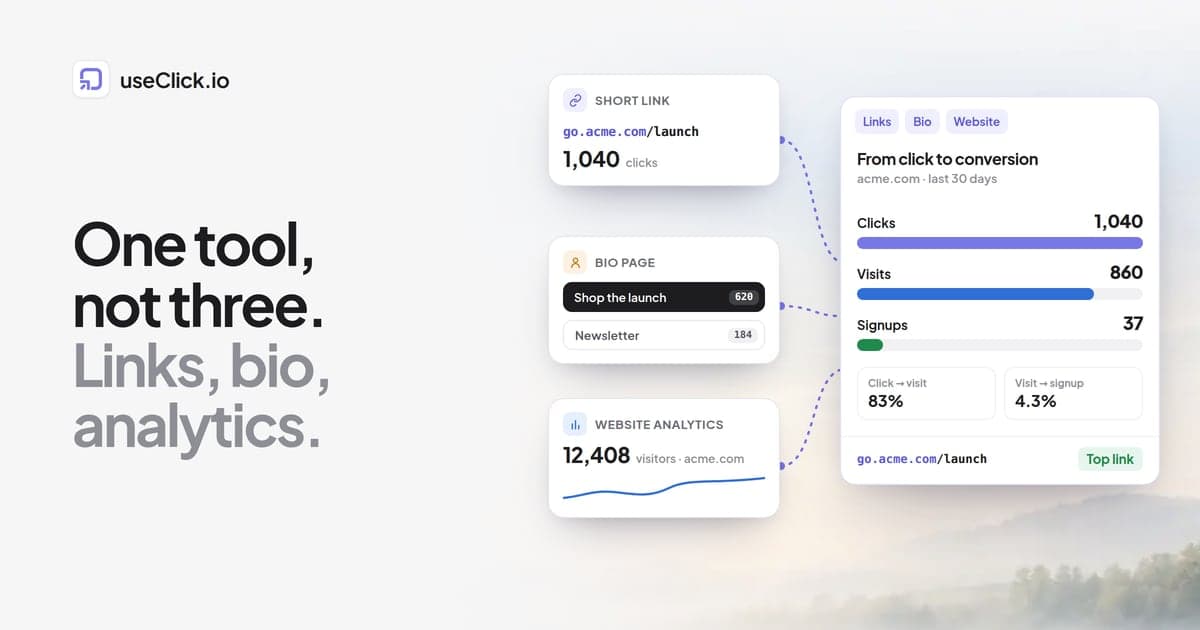
Implement role-based access controls for link management. Your SEO team needs visibility into broken links and redirect performance. Your content team needs the ability to update URLs. But not everyone requires access to granular click data. Separating link health monitoring from user analytics reduces your data processing footprint and simplifies privacy-first marketing operations.
Testing and Validating Link Fixes
Fixing a broken link creates a new risk: breaking something else. Hasty redirects might send users to irrelevant pages, or worse, create redirect loops that crash entire sections of your site. Validation before implementation prevents fixing one SEO problem by creating three others.
Use A/B testing on redirect destinations to ensure you're preserving user intent. When a product page returns 404, should users land on the category page, a similar product, or a search results page? Test each option with real traffic to measure which maintains the best engagement metrics: time on site, bounce rate, conversion rate. The answer varies by site type and audience.
Tools like A/B testing for link destinations let you validate fixes server-side before committing to permanent redirects. Route 50% of traffic to one destination and 50% to another, then compare performance over a statistically significant sample. This prevents the common mistake of redirecting all broken product pages to the homepage, which tanks user experience despite technically eliminating the 404.
Monitor the pages receiving redirect traffic for sudden bounce rate increases. If your analytics show that a redirect destination experiences a 40% bounce rate spike after you implement a fix, the redirect isn't solving the user's problem. Iterate until you find the destination that best matches the original page's intent.
Schedule periodic crawls focused on recently fixed links. Verify that redirects still work after site updates, server migrations, or CMS changes. A redirect that worked perfectly in March might break in April after a routine WordPress update or CDN configuration change.
Scaling Link Maintenance Across Large Sites
Enterprise sites with thousands of pages can't rely on manual link checking, even with automation detecting the breaks. You need systems that not only identify issues but also suggest or implement fixes at scale.
Content management systems should integrate directly with link monitoring platforms. When your CMS creates a new URL structure during a migration, your link tracker should automatically map old URLs to new destinations and create redirect rules. This integration prevents the common scenario where IT completes a migration successfully from a technical perspective, but SEO tanks because hundreds of backlinks now point to 404s.
Bulk redirect management becomes essential above 500 pages. Use bulk upload capabilities to implement hundreds of redirect rules simultaneously rather than configuring each individually. This is particularly critical during site redesigns, platform migrations, or content pruning initiatives that affect URL structures at scale.
Automated alerts for high-value pages ensure critical breaks get immediate attention. Configure your monitoring system to send real-time notifications when breaks occur on pages that rank in the top 10 for target keywords, generate significant revenue, or receive substantial backlink equity. Lower-priority breaks can batch into weekly reports for systematic cleanup.
Common Misconceptions About Link Rot
Many SEO specialists assume link rot primarily affects old sites with neglected content from the early 2010s. The data contradicts this. The Pew Research study shows 8% of pages from 2021 were already inaccessible by 2023, just two years later. Recent content decays almost as quickly as older material, especially in fast-moving industries where companies frequently rebrand, merge, or pivot.
Another misconception: all broken links hurt SEO equally. The reality is more nuanced. A broken link to a cited source in a research article might matter less than a broken internal link in your primary navigation. Context determines impact. Search engines evaluate link placement, surrounding content, and whether the break affects core user journeys.
Some teams worry that implementing too many redirects will slow site performance. While massive redirect chains do create latency, single-hop redirects from broken URLs to relevant destinations add negligible load time, typically under 50 milliseconds. The SEO benefit of preserving link equity vastly outweighs the minor performance cost.
There's also a belief that 32-39% of naturally redirecting links (sites that moved but implemented their own redirects) don't require intervention. This is partially true, but those redirects aren't guaranteed to be permanent. The external site might remove that redirect chain in six months, leaving you with a 404. Monitor even successfully redirecting external links to catch when they eventually break.
Frequently Asked Questions
How often should I check for broken links on my website?
High-traffic pages and those with strong backlink profiles should be monitored continuously with automated real-time checks. For the rest of your site, monthly crawls provide adequate coverage for most businesses. Sites with over 20 external links per page or those in fast-changing industries like news or tech should increase frequency to weekly checks.
Do broken external links hurt SEO as much as broken internal links?
Broken external links primarily hurt user experience and signal outdated content, which indirectly affects rankings. Broken internal links directly fragment your site architecture and prevent PageRank flow, typically causing more immediate SEO damage. However, a page with numerous broken external citations may be demoted for appearing poorly maintained, especially in YMYL (Your Money Your Life) categories where source credibility matters.
Can I fix broken links without technical knowledge?
Basic broken link fixes, updating URLs in your CMS or creating simple redirects, require minimal technical skill. Most modern platforms offer point-and-click redirect tools. For complex issues like redirect chains, server-level configurations, or bulk migrations affecting thousands of URLs, technical expertise or specialized tools become necessary to avoid creating new problems while fixing old ones.
How do I track broken backlinks pointing to my site?
Server-side monitoring platforms track incoming traffic patterns and alert you when external links start generating 404s. You can also use search console data to identify which external URLs attempt to reach non-existent pages on your domain. Once identified, implement targeted redirects to capture that inbound authority, or reach out to the linking site to request they update the URL to your current page structure.
Protect Your SEO Investment With Proactive Link Management
Link rot isn't slowing down. As the web continues fragmenting, with platforms shutting down, content churning faster, and AI-generated sites appearing and vanishing overnight, the rate of broken links will only accelerate. SEO specialists who treat link maintenance as a quarterly cleanup task rather than an ongoing infrastructure priority will watch their domain authority erode while competitors automate their way to stability.
The solution is privacy-compliant, server-side monitoring that detects breaks in real time, prioritizes fixes by SEO impact, and validates redirect destinations before implementation. Combined with strategic use of link metrics that actually matter, you can turn link maintenance from a reactive scramble into a system that preserves years of SEO investment.
Modern link management doesn't require sacrificing privacy for functionality. Server-side tracking, EU-hosted infrastructure, and cookie-free analytics let you maintain comprehensive link health monitoring while staying compliant with GDPR and emerging privacy regulations. Start with your highest-traffic pages, automate detection and alerting, and build systematic processes that scale with your content.