
SMS marketing delivers a 98% open rate, with 90% of messages opened within three minutes. But there's a problem most marketers miss: your shortened links might be why your carefully crafted campaigns never reach anyone at all. As carriers tighten spam filtering and privacy regulations reshape tracking requirements, generic shortened URLs have become a hidden deliverability cost.
If you're still using a shared, unbranded link shortener for SMS campaigns, you're likely triggering carrier filters that flag your messages as spam, regardless of how legitimate the content is. The issue isn't your offer or your TCPA compliance. It's the link itself.
How Carrier Filtering Targets Generic Shortened Links
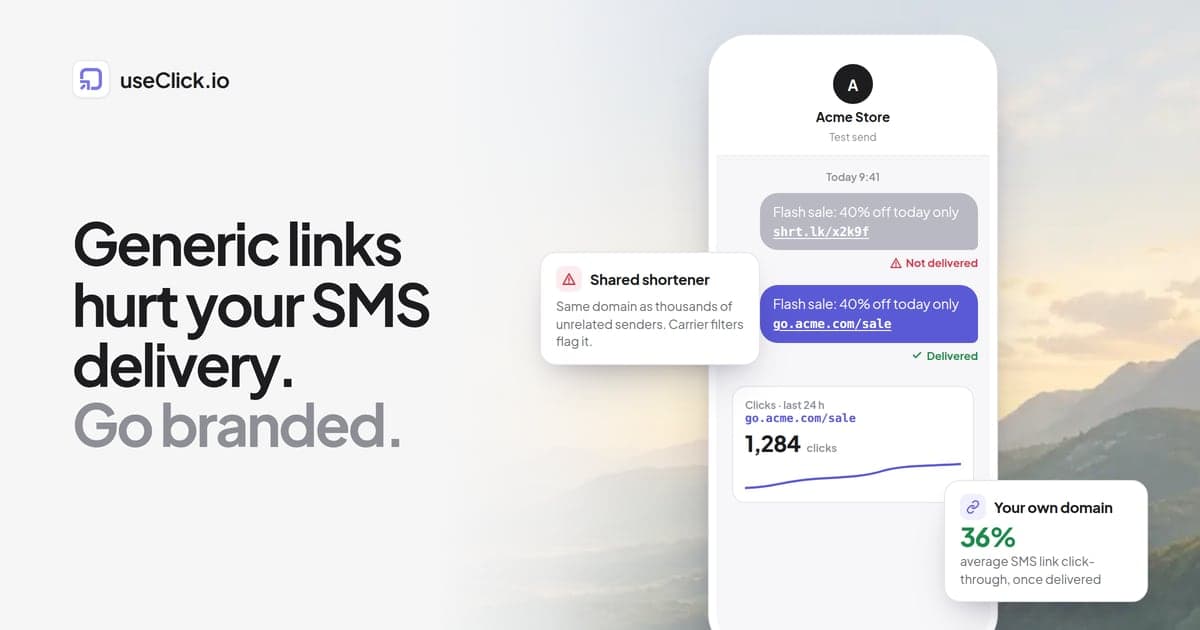
SMS carriers like Verizon, AT&T, and T-Mobile use machine learning systems to detect suspicious messaging patterns, and that analysis includes the structure and reputation of any shortened URL in the message. When a carrier's filter sees a generic shortened link that's been reused across thousands of unrelated campaigns, it raises a flag immediately.
The problem compounds because multiple unrelated businesses share the same shortener domain. A carrier has no way to tell a legitimate promotional message from a phishing attempt when both use the same generic URL structure. The result: your message gets silently filtered, deliverability drops, and the 36% average SMS click-through rate you were counting on never has a chance to happen.
According to MessageDesk, links in SMS texts earn an average 36% click-through rate, but only once they clear carrier filters and actually reach an inbox. When a generic shortened link trips spam detection, that number disappears entirely. You lose more than clicks: you lose the message before it's even delivered.
Why Branded Link Management Improves Deliverability
The fix isn't to drop link shortening. SMS character limits make a shortened link necessary, and tracking performance is non-negotiable if you want to optimize. The fix is a branded short link that carries your own domain and builds carrier trust rather than borrowing someone else's.
A custom branded domain, something like track.yourcompany.com instead of a shared generic shortener, lets carriers verify sender authenticity through DNS records and domain reputation. That authentication cuts spam filter triggers because the link becomes part of your brand's own trust signal instead of a resource shared with senders you have nothing to do with.
Consumer opt-in for SMS from businesses reached 84% in 2025, up 35% since 2021. That volume has pushed carriers toward stricter filtering, which makes a branded link one of the clearest ways to read as a legitimate sender in an increasingly scrutinized channel.
Branded links also do work with the recipient directly. A shortened URL carrying recognizable brand elements gets clicked more often than an anonymous generic one, since people trust what they recognize. That trust effect compounds with the technical deliverability gains, both pushing SMS marketing campaigns in the same direction.
The Privacy Compliance Problem With Traditional Link Shorteners
Deliverability isn't the only risk a generic shortener creates. Cookie-based tracking runs into GDPR, CCPA, and other privacy frameworks that are being enforced more aggressively every year. If your shortened link redirects through a third-party tracking platform that sets cookies on the recipient's device, you've created compliance exposure most marketers don't realize is there.
That's worse in SMS specifically, because a recipient consented to receive text messages from you, not to have their behavior tracked by an external analytics platform with its own unclear data residency and retention rules.
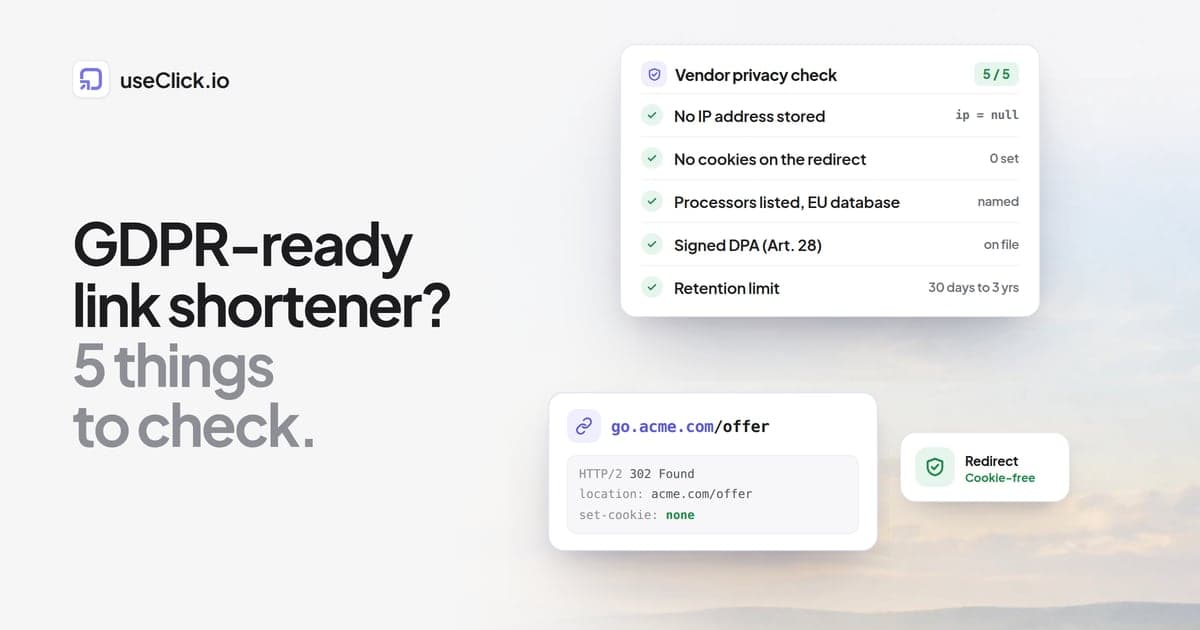
This is where privacy-first analytics matters. Modern SMS link shorteners capture analytics server-side during the redirect, without storing anything on the recipient's device. That removes the need for consent banners, third-party cookies, and the compliance overhead that comes with older tracking methods.
For industries like finance and healthcare, where SMS campaigns already run 21 to 35% click-through rates, privacy compliance isn't optional. A single GDPR violation can cost more than an entire year's marketing budget. A privacy-compliant SMS link shortener protects both your deliverability and your legal exposure at the same time.
Analytics Blind Spots Cost You Optimization Opportunities
Even when a generic shortened link does reach recipients, it rarely offers the granular analytics SMS marketers need to actually optimize. Basic click counts show engagement, not the behavioral differences that explain why one segment converts and another doesn't.
Good SMS marketing needs geolocation, device type, timing, and referrer data. Send a promotion to a national list and you need to know whether iPhone users in California respond differently than Android users in Texas. Generic shorteners rarely go that deep, which leaves you guessing at which variables actually move the number.
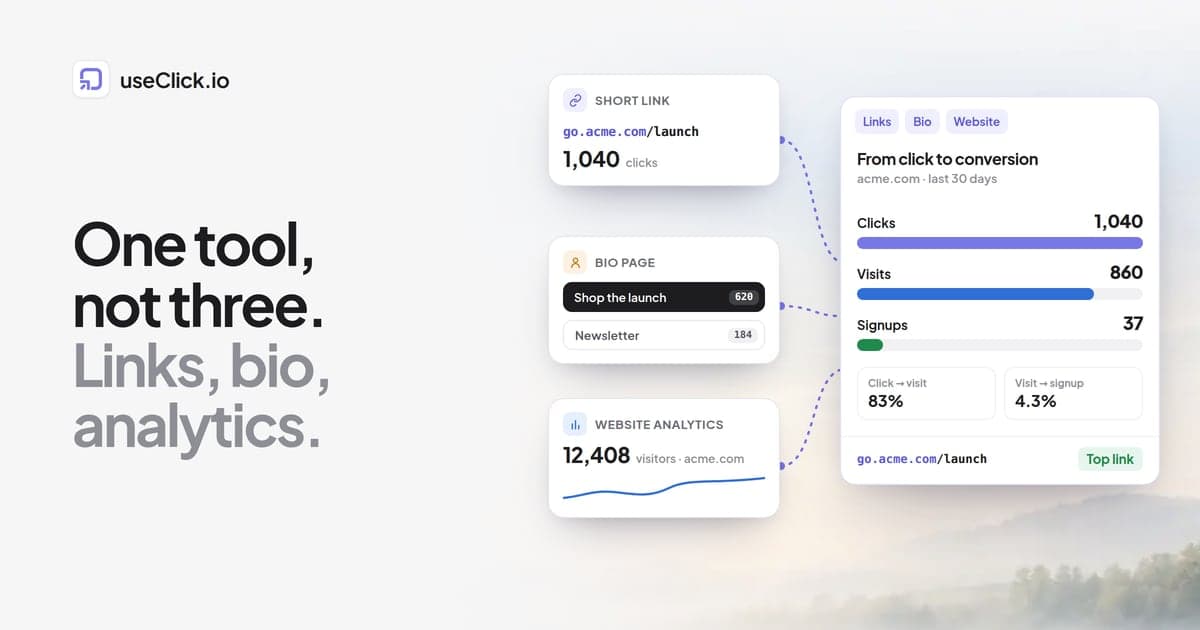
Server-side analytics built into privacy-first SMS link shorteners capture that behavioral data without the privacy trade-off: clicks by city, region, device, browser, operating system, and time of day, all while staying GDPR-compliant because no personal data passes through third-party cookies.
That depth is what makes optimization possible in the first place. You can learn that your SMS performs best sent between 11am and 1pm on weekdays, or that mobile users in metro areas convert at twice the rate of desktop users in rural ones. None of that is visible from a generic shortener's basic click count.
Implementing Branded, Privacy-First SMS Link Management
Moving from a generic shortener to a branded one doesn't mean rebuilding your marketing stack. Most teams can get through this in three steps in under a day.
First, set up a custom branded domain just for shortened links, a subdomain of your primary brand domain like go.yourbrand.com or track.yourbrand.com. Point the DNS records at your link management platform, which authenticates ownership and starts building domain reputation with carriers.
Second, migrate existing SMS campaigns to the branded links instead of the generic ones. Most link management platforms support bulk upload, so you can convert hundreds of URLs at once while keeping historical analytics intact. This protects existing campaign performance while you upgrade deliverability going forward.
Third, put analytics in place that capture SMS-specific behavior without privacy trade-offs. Look for cookie-free tracking with dashboards covering geographic distribution, device breakdown, timing, and referrer, and make sure the data exports cleanly into your broader marketing analytics stack.
The URL shortener market is growing at a 20% CAGR through 2030, with integrated analytics increasingly baked in as standard. That growth reflects a simple shift: link management stopped being a convenience feature and became a requirement for high-compliance channels like SMS.
Real-World Impact on SMS Campaign Performance
The gap between generic and branded link management shows up fast in real campaigns. A financial services company sending account verification texts saw deliverability climb from 87% to 96% just by switching from a generic shortener to branded links, a filtering improvement that put 10% more critical account messages in front of customers who needed them.
An e-commerce brand running promotional SMS measured a 23% lift in click-through rate after switching to branded shortened links. Better deliverability and more recipient trust compounded into a result generic links couldn't reach on their own.
Neither of those is an outlier. As carriers keep tightening spam filters against rising SMS volume, the gap between branded and generic link deliverability will only widen. Getting ahead of it now, with privacy-first branded link management, is the kind of advantage that gets more valuable the longer you wait to make the switch.
Frequently Asked Questions
What makes an SMS link shortener better than using regular URLs?
SMS character limits make a shortened link necessary just to fit meaningful message content alongside a trackable URL. A proper SMS link shortener also reports on click behavior, geography, and device, insight a plain untracked URL can't give you. The distinction that matters is choosing a branded, privacy-compliant shortener instead of a generic one that trips carrier filters.
How do carrier spam filters detect suspicious shortened links?
Carriers run machine learning models against URL structure, domain reputation, usage across multiple senders, and past spam associations. A generic shortened link reused across thousands of unrelated campaigns has no sender authentication behind it, which makes it statistically more likely to get flagged. A branded link tied to your own verified domain gives carriers a trust signal that reduces those triggers.
Can I use privacy-first link tracking without violating GDPR?
Yes. Server-side analytics capture click data during the redirect without storing anything on the recipient's device or relying on third-party cookies. That keeps you GDPR-compliant, since no personal data is processed through an external tracking system, and the analytics stay under your own data ownership. Recipients opted into your SMS list, not into a third-party tracking platform.
Does branded link shortening work for small businesses with limited technical resources?
Yes. Setting up a custom domain usually takes nothing more than basic DNS configuration, no coding required, and most platforms offer a guided setup and support team to handle the technical details. The deliverability and compliance gains are worth the small amount of setup effort.
Stop Letting Generic Links Sabotage Your SMS Performance
SMS marketing's 98% open rate and near-instant engagement make it one of the strongest channels available, but a generic shortened link undermines all of it: carrier filters flag it, privacy compliance gets shakier, and the analytics you need to optimize simply aren't there. As filtering tightens and privacy regulation expands, branded link management stops being a nice-to-have and becomes table stakes.
The marketers who win in SMS aren't necessarily the ones with the biggest budgets. They're the ones who treat every part of the message, including the shortened link, as something that affects deliverability and trust.
Moving off bit.ly? The UseClick vs Bitly comparison covers pricing, limits and features side by side.
Try UseClick's privacy-first link management, built for marketers who need GDPR-compliant analytics, branded custom domains, and server-side tracking without a consent banner.